

Table of Contents
1. What Is Cyber Security?
2. What Is Ethical Hacking?
3. Ethical Hacking vs Cyber Security: Key Differences
4. Skills Required for Ethical Hackers and Cyber Security Professionals
5. Educational Pathways and Certifications
6. Practical Learning: Why Cyber Labs Matter
7. Career Opportunities in Ethical Hacking
8. Career Opportunities in Cyber Security
9. Salary Comparison: Ethical Hacking vs Cyber Security in India
10. Which Career Path Should You Choose?
11. How to Choose the Right Cyber Security Institute
12. Conclusion
The growth of digital technology across India and the globe has created a continuous demand for qualified computer security specialists. As companies move their operations online and store sensitive user data in cloud environments, they face ongoing risks from data breaches, system exploits, and ransomware attacks. For students, graduates, and career changers exploring this field, choosing the right educational and professional path can feel challenging.
When researching training programmes, people frequently confuse the terms Ethical Hacking vs Cyber Security. While both areas share the ultimate goal of protecting networks, applications, and operating systems, they represent different approaches to digital safety. This guide clarifies the difference between ethical hacking and cyber security by examining their distinct methodologies, day-to-day duties, educational requirements, and salary structures in India. It is designed to help you determine which is better ethical hacking or cyber security for your individual professional objectives.
1. What Is Cyber Security?
To understand how these disciplines interact, it is helpful to look first at the broader field. Cyber security is an overarching discipline focused on protecting digital systems, networks, servers, and data from unauthorised access, destruction, or alteration. This field addresses information security from a systemic perspective, establishing defensive strategies, security policies, access controls, and emergency recovery plans.
A what is cyber security career pathway involves designing and implementing security systems to maintain the confidentiality, integrity, and availability of an organisation's assets. Professionals in this sector monitor network traffic, establish firewall configurations, and handle incident responses when defensive layers are breached. Because organisations across sectors must continuously protect their systems, there is a steady rise in diverse cyber security job opportunities. To see how educational institutions prepare students for these broad duties, read about Cyber Security Colleges in India: Courses, Careers and Opportunities.
2. What Is Ethical Hacking?
If cyber security is the broad strategy for protecting an organisation, ethical hacking is a specific, active technique used within that strategy. Ethical hacking is the practice of locating weaknesses in a computer system, application, or network infrastructure by intentionally mimicking the tactics of a malicious attacker. Rather than causing damage, these professionals report their findings to management so that the vulnerabilities can be repaired.
An ethical hacker career centres on active, offensive testing methods. These specialists perform penetration testing and vulnerability assessments to find entry points that unauthorised parties might exploit. Understanding what is ethical hacking is essential for appreciating its defensive value. By finding security flaws before malicious actors do, ethical hackers help organisations strengthen their networks. To understand how practical environments support this learning, refer to the Importance of Cyber Labs in Cyber Security Education.
3. Ethical Hacking vs Cyber Security: Key Differences
To understand the difference between ethical hacking and cyber security, it is useful to compare their core objectives and operational approaches. Cyber security focuses on system defence and maintaining security policies. Ethical hacking, by contrast, uses offensive testing to identify weaknesses.
The following table provides a clear cybersecurity comparison between these two disciplines:
| Parameter | Ethical Hacking | Cyber Security |
|---|---|---|
| Primary Goal | Locate weaknesses before they are exploited | Protect digital assets and maintain defence systems |
| Approach | Offensive security testing | Defensive security management |
| Key Activities | Penetration testing and system exploitation | Monitoring systems, managing firewalls, and recovery |
| Scope | Focuses on testing specific system components | Encompasses all security policies, tools, and compliance |
| Job Roles | Penetration Tester, Vulnerability Analyst | SOC Analyst, Security Architect, Security Engineer |
This ethical hacking vs cybersecurity comparison shows how the two roles work together. Ethical hackers identify weaknesses, and cyber security teams use those findings to improve overall defences. Educational programmes in IT hubs regularly update their curricula to cover both offensive and defensive tactics. To see how these training methods are changing, read about How Cyber Security Courses in Pune Are Adapting to New Threats.
4. Skills Required for Ethical Hackers and Cyber Security Professionals
Success in either discipline requires a solid understanding of computer science fundamentals, along with specialised technical competencies. The baseline skills required for ethical hackers and cyber security professionals begin with a working knowledge of operating systems (such as Linux and Windows) and network protocols.
To build effective cyber security skills, professionals must master risk assessment, firewall configuration, intrusion detection, and security compliance. On the offensive side, developing ethical hacking skills requires a strong grasp of penetration testing skills, such as port scanning, social engineering tactics, and reverse engineering of software.
Both roles require analytical thinking and clear communication skills to explain complex technical threats to non-technical business leaders. To determine whether a structured academic course is needed to acquire these skills, read about Is It Necessary to Take Cybersecurity Courses.
5. Educational Pathways and Certifications
Aspiring professionals can choose from several academic and professional certification paths. A standard entry point is a dedicated university degree, such as a B.Sc in Cyber Security, which provides a broad foundation in computing and digital security.
To supplement an academic degree, specialised certifications are highly valued by employers. An ethical hacking course will often prepare students for industry credentials such as the Certified Ethical Hacker (CEH) or Offensive Security Certified Professional (OSCP).
Conversely, general cyber security certification programs often focus on defensive administration and risk management, such as the Certified Information Systems Security Professional (CISSP) or CompTIA Security+. Continuous upskilling through these certifications helps professionals keep pace with evolving threats. For more details on the academic foundations of these careers, read What Is a BSc in Cybersecurity and Why Is It in High Demand?.
6. Practical Learning: Why Cyber Labs Matter
Digital security cannot be learned solely from textbooks. Students must have opportunities to practice their skills in realistic environments. Dedicated cyber security labs and training facilities are essential, as they allow students to run security tools, conduct penetration testing, and practice defending systems in safe, simulated environments.
Within these labs, students can engage in ethical hacking practice through structured events like Capture-the-Flag (CTF) competitions. These exercises teach students how to identify vulnerabilities under simulated pressure. This style of practical ethical hacking training helps students build the problem-solving skills needed to handle real-world security incidents. To learn more about how dedicated training facilities improve learning outcomes, read about the Importance of Cyber Labs in Cyber Security Education.
7. Career Opportunities in Ethical Hacking
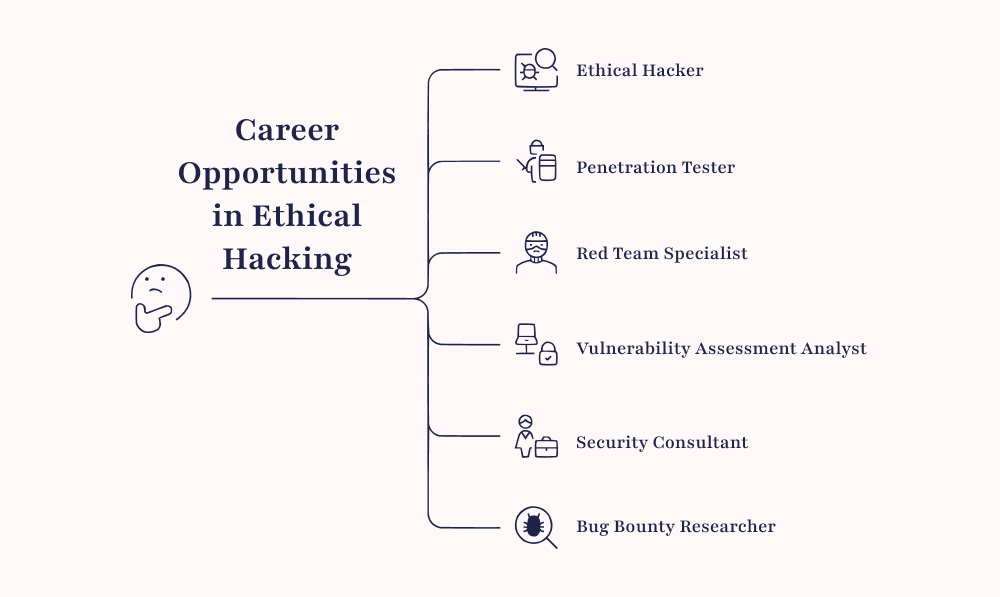
An ethical hacker's career scope is centred on finding security flaws and reporting them to system owners. As businesses grow more reliant on web applications and mobile services, the demand for proactive testing specialists continues to rise.
Common ethical hacking jobs and career pathways include:
- Penetration Tester - Performing authorised attacks on applications and networks to find vulnerabilities.
- Red Team Specialist - Simulating adversarial attacks to test an organisation's incident response capabilities.
- Vulnerability Assessment Analyst - Using scanning tools to find and document security weaknesses.
- Security Consultant - Advising businesses on how to improve their systems based on threat evaluations.
These roles offer a rewarding ethical hacking career path for those who enjoy technical problem-solving and finding hidden system flaws. For a broader look at the motivations for entering this field, read 6 Compelling Reasons Why You Should Study Cyber Security.
8. Career Opportunities in Cyber Security

Because cyber security covers many different defensive disciplines, it offers a wide variety of career paths. Professionals can specialise in areas like network monitoring, cloud infrastructure security, policy compliance, or digital forensics.
Key cyber security jobs and roles in this field include:
- Cyber Security Analyst - Monitoring network traffic and system logs to identify and respond to suspicious activity.
- SOC (Security Operations Centre) Analyst - Managing real-time security alerts and responding to security incidents.
- Incident Responder - Leading the immediate technical response and recovery efforts after a security breach.
- Security Architect - Designing secure network layouts and system architectures for organisations.
- Cloud Security Specialist - Establishing and maintaining security configurations for cloud platforms like AWS or Azure.
These cyber security professions provide long-term career growth, as organisations of all sizes require ongoing defensive support. To understand how emerging technologies like artificial intelligence are shaping these roles, read Cyber Security Graduates Are in High Demand in the AI Era.
9. Salary Comparison: Ethical Hacking vs Cyber Security in India

Salaries in both fields are competitive, though actual compensation depends on certifications, technical skills, location, and experience.
The following table outlines the typical cyber security salary and ethical hacking salary trends across various experience levels in India:
| Experience Level | Ethical Hacking Salary (Annual Range) | Cyber Security Salary (Annual Range) |
|---|---|---|
| Fresher (0 to 2 Years) | ₹3.5 Lakhs to ₹6 Lakhs | ₹3 Lakhs to ₹5.5 Lakhs |
| Mid-Level (3 to 7 Years) | ₹7 Lakhs to ₹14 Lakhs | ₹6.5 Lakhs to ₹13 Lakhs |
| Senior-Level (8+ Years) | ₹15 Lakhs to ₹25+ Lakhs | ₹14 Lakhs to ₹24+ Lakhs |
Entry-level positions provide a solid starting point, while mid-level and senior roles offer significant growth as professionals take on greater responsibilities. To see how industry trends and technology shifts impact the ethical hacker salary in India and the cyber security salary in India, refer to the analysis on Cyber Security Graduates Are in High Demand in the AI Era.
10. Which Career Path Should You Choose?
Deciding on a cyber security vs ethical hacking career path depends largely on your personal technical interests, working style, and professional goals.
You might prefer an ethical hacker career if you:
- Enjoy offensive security testing and finding system vulnerabilities.
- Prefer deep, focused technical tasks, such as scripting, penetration testing, and analysing code.
- Are interested in bug bounty programs and simulating real-world hacker tactics.
You might prefer a broader cyber security career if you:
- Enjoy defensive security strategies, incident response, and system monitoring.
- Are interested in designing secure systems, setting security policies, and managing risk.
- Want a wider variety of career paths, including roles in compliance, cloud security, and digital forensics.
Both paths offer strong career prospects. Additionally, many professionals start with a broad cybersecurity foundation and later specialise in ethical hacking. To evaluate these pathways further, you can read about What Are the Benefits of Cyber Security Courses?.
11. How to Choose the Right Cyber Security Institute
Finding a high-quality institution is key to launching your career in either discipline. When researching ethical hacking courses in Pune and other technology hubs, you should evaluate the available learning resources.
A good program should provide:
- An industry-aligned curriculum covering both offensive testing and defensive operations.
- Modern, dedicated cyber labs for practical training.
- Experienced faculty to guide your study.
- Active placement assistance and connections with top employers.
Focusing on these points during your cyber security institute selection process will help you find a program that prepares you for the job market. For guidance on selecting the right college, read about How to Choose the Best Cyber Security Institute in Pune.
12. Conclusion
Ethical Hacking and Cyber Security are closely related fields that work together to protect digital systems. Ethical hacking offers a focused, offensive career path centred on vulnerability testing, while cyber security provides a broader range of roles in system defence, risk management, and network monitoring. Both areas offer competitive salaries, high demand, and strong opportunities for professional growth.
The right choice depends on your interests and career goals. Choosing a program that combines academic instruction with hands-on lab training is an excellent way to prepare for either path.
The MIT ACSC cyber security program supports students by offering a practical, industry-focused curriculum, modern cyber labs, and experienced faculty mentorship. This hands-on academic environment, combined with strong cyber security placement opportunities, prepares graduates to build successful careers in the digital security industry.