

Table of Contents
1. Understanding Computer Science, BCA, and MCA
2. Eligibility Criteria and Admission Requirements
3. Curriculum Comparison: What Will You Study?
4. Computer Science vs BCA: The Major Differences
5. Why Many Students Choose MCA After BCA
6. Skills You Develop in Each Course
7. Career Opportunities After Each Course
8. Salary Comparison and Future Scope
9. Which Course is Best for Different Career Goals?
10. Challenges Students Face and How to Overcome Them
11. How to Choose the Right College for Your IT Career
12. Building Your IT Career Roadmap
13. Wrapping Up!
14. FAQs
Computer Science vs BCA vs MCA: Which Course is Best for a Successful IT Career?
Choosing the best computer course after 12th is one of the most confusing decisions students face. Three names come up in almost every conversation: Computer Science, BCA, and MCA. They sound similar on the surface, but they serve very different purposes.
The IT industry in India needs software developers, cloud engineers, AI specialists, and data scientists in growing numbers every year. The course you pick now will shape which of those roles you qualify for later. This guide breaks down the Computer Science vs BCA debate and extends it to MCA so that you can choose based on facts.
1. Understanding Computer Science, BCA, and MCA
| Parameter | B.Sc Computer Science | BCA | MCA |
|---|---|---|---|
| Full Form | Bachelor of Science in Computer Science | Bachelor of Computer Applications | Master of Computer Applications |
| Level | Undergraduate | Undergraduate | Postgraduate |
| Duration | 3 years | 3 years | 2 years |
| Core Focus | Theory, algorithms, research | Application development, software | Advanced programming, specialisation |
| Best Suited For | Students who enjoy maths and logic | Students who want to code and build | Graduates who want senior tech roles |
A Computer Science course is rooted in the theoretical foundations of computing. It covers algorithms, mathematics, and system-level concepts. Therefore, if you enjoy problem-solving and research then choose this path.
Read more about why students choose B.Sc Computer Science.
BCA courses lean toward application development, web technologies, and software skills. It is built for students who want to write code from day one.
MCA takes graduates deeper into cloud computing, AI, and enterprise software development.
Read what you must know before pursuing M.Sc Computer Science.
2. Eligibility Criteria and Admission Requirements
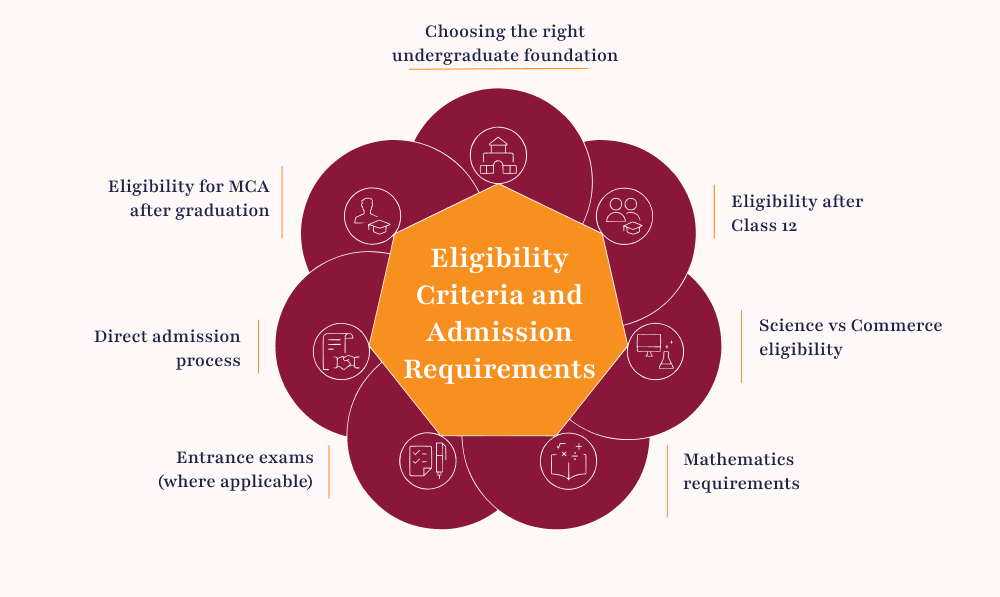
| Course | Qualification | Stream | Minimum Marks | Entrance Exam |
|---|---|---|---|---|
| B.Sc CS | 10+2 | Science (PCM) | 50% | University-level test |
| BCA | 10+2 | Any stream | 45-50% | MAH BCA CET / CUET |
| MCA | Graduation | Any (with Maths) | 50% | MAH MCA CET / CUET PG |
The most common question students ask at this stage is about the difference between BCA and Computer Science eligibility. B.Sc CS requires a Science background with PCM. BCA accepts students from any stream, making it more accessible. Students who plan their undergraduate degree with MCA in mind should ensure their foundation includes programming and mathematics.
Read about a career in BCA after class 12.
Also, check the B.Sc Computer Science eligibility criteria for detailed requirements.
3. Curriculum Comparison: What Will You Study?

B.Sc Computer Science covers:
- Data Structures and Algorithms
- Operating Systems
- Database Management
- Artificial Intelligence and Machine Learning
- Software Engineering
- Advanced Mathematics
BCA covers:
- Programming Languages (C, Java, Python)
- Web Development and Mobile Applications
- Database Management and Networking
- Software Development and Testing
- Computer Fundamentals
MCA covers:
- Advanced Programming and Software Architecture
- Cloud Computing and DevOps
- AI, ML, and Data Analytics
- Cybersecurity
- Enterprise Application Development
- Research Projects
The curriculum depth is where things are different. A B.Sc. in Computer Science delves deeply into theory and research. BCA gives you a working knowledge of the tools and frameworks companies use today.
Read the complete guide to excelling in a BCA programme.
Also, explore the complete guide for B.Sc students.
4. Computer Science vs BCA: The Major Differences
This is the question most students start with. The answer comes down to what kind of learner you are.
| Factor | B.Sc Computer Science | BCA |
|---|---|---|
| Mathematical Depth | High | Moderate |
| Programming Exposure | Moderate (theory-first) | High (application-first) |
| Industry Orientation | Research, system-level roles | Software dev, IT services |
| Practical Learning | Lab-based | Project-based |
| Higher Education | M.Sc CS, MCA, MBA | MCA, M.Sc CS, MBA |
| Career Speed | Slower entry, deeper foundation | Faster entry, practical skills |
Students who are stuck on the BCA or BSc Computer Science decision should first consider their own strengths. If you enjoy maths and abstract thinking, a B.Sc. CS will feel natural. If you prefer building applications and working on projects, BCA is the better fit.
Read a detailed comparison: BCA vs B.Sc Computer Science. Also, check BCA vs Computer Science Engineering.
5. Why Many Students Choose MCA After BCA

An undergraduate degree gives you the entry ticket. An MCA course gives you the specialisation that employers pay a premium for. Students gain advanced skills in software architecture, full-stack development, and emerging technologies through this postgraduate programme.
- BCA gets you started in the industry
- MCA takes you into leadership and specialist roles
- The salary gap between the two widens after two years of experience
Read more about what to do after BCA. Also, check whether an M.Sc in Computer Science is worth it.
6. Skills You Develop in Each Course
| Skill Area | B.Sc CS | BCA | MCA |
|---|---|---|---|
| Algorithmic Thinking | Strong | Moderate | Strong |
| Application Development | Moderate | Strong | Strong |
| System Design | Strong | Moderate | Strong |
| Database Management | Moderate | Strong | Strong |
| Cloud and AI | Basic | Basic | Advanced |
| Project Management | Low | Moderate | High |
| Research Skills | Strong | Low | Moderate |
Students who pursue MCA after BCA see the biggest jump in cloud, AI, and project management skills. That progression is what makes the two-year investment worthwhile for many graduates.
Read about the benefits of studying BCA. Also, explore the top skills gained from an M.Sc in Computer Science.
7. Career Opportunities After Each Course
After B.Sc Computer Science:
Software Developer, System Analyst, Data Analyst, Database Administrator, QA Engineer, Technical Support Engineer
After BCA:
Full Stack Developer, Mobile App Developer, UI/UX Developer, Web Developer, Cloud Support Associate, IT Support Executive
After MCA:
Senior Software Engineer, Solution Architect, Cloud Engineer, DevOps Engineer, AI/ML Engineer, Cybersecurity Specialist, IT Project Manager
The BCA vs MCA distinction is most visible at this stage. BCA opens entry-level development roles. MCA qualifies you for architect, lead, and specialist positions that carry higher responsibility and pay.
Check the scope of a BCA degree. Also, read about B.Sc Computer Science career opportunities.
8. Salary Comparison and Future Scope
| Career Stage | B.Sc CS | BCA | MCA |
|---|---|---|---|
| Entry Level | INR 3-5 LPA | INR 3-6 LPA | INR 5-10 LPA |
| Mid Level (3-5 yrs) | INR 6-10 LPA | INR 6-12 LPA | INR 10-18 LPA |
| Senior Level (7+ yrs) | INR 12-20 LPA | INR 12-22 LPA | INR 18-30+ LPA |
These numbers vary based on skills, certifications, internship experience, and location. IT career opportunities in AI, cloud computing, cybersecurity, and data science carry the highest salary premiums today. Demand in these areas is only going up.
Read about salary and scope after M.Sc Computer Science. Also, read what placement season means for M.Sc Computer Science students.
9. Which Course is Best for Different Career Goals?
Choose B.Sc Computer Science if you:
- Enjoy mathematics and logical problem-solving
- Want a strong theoretical foundation in computing
- Plan to pursue M.Sc or research after graduation
Choose BCA if you:
- Prefer building software and applications
- Want to enter the industry quickly after graduation
- Learn better through projects than textbooks
Choose MCA if you:
- Want advanced technical expertise and specialisation
- Aspire to leadership or architect-level roles
- Seek higher salary brackets in the technology sector
Students interested in postgraduate options can explore M.Sc Computer Application programmes that offer similar depth with a research-oriented approach. The right answer depends on your interests, your academic background, and where you see yourself in five years.
Also, explore why students choose B.Sc Computer Science.
10. Challenges Students Face and How to Overcome Them
Every IT student faces the same hurdles, regardless of the course.
- Learning to code feels overwhelming at first. Consistent practice is the only fix.
- Balancing theory with projects takes discipline. Set aside dedicated hours for each.
- Keeping up with changing technologies is a real challenge. Follow industry blogs and take short courses.
- Building a portfolio matters more than grades. Start a GitHub account in your first year.
- Preparing for placements requires mock interviews, aptitude practice, and soft skills training.
Colleges with strong placement support help students overcome these hurdles through structured training programmes, mock drives, and industry mentorship. The students who treat learning as a daily habit are the ones who land the strongest offers.
Read about gaining top skills from an M.Sc in Computer Science.
11. How to Choose the Right College for Your IT Career
The college you pick shapes your first job more than most students realise. Here is what to evaluate:
- Is the curriculum updated as per current industry needs?
- Do faculty members have real industry experience?
- Are modern computer labs and coding culture part of campus life?
- Does the college offer structured internship support?
- What companies actually visit the campus for recruitment?
- Are certifications and value-added programmes included?
Students considering BCA colleges in Pune should evaluate all these factors before making a final decision.
Also, explore B.Sc CS colleges in Pune and read about why MIT ACSC is a smart career move.
12. Building Your IT Career Roadmap
Here is a practical IT career roadmap from Class 12 to a successful technology career.
- Pick B.Sc CS or BCA based on your learning style
- Learn programming fundamentals in your first year
- Participate in coding competitions from year two onward
- Build real projects and maintain a GitHub portfolio
- Complete at least one internship before your final year
- Earn certifications in cloud, cybersecurity, or data science
- Consider MCA or M.Sc CS for deeper specialisation
- Go through campus placements with a strong resume
- Keep upskilling throughout your career
Technology does not stay still, and neither should you.
Read about a career in BCA after Class 12.
13. Wrapping Up!
There is no single "best" course among Computer Science, BCA, and MCA. B.Sc CS gives you depth. BCA gives you speed. MCA gives you specialisation. The right choice depends on what you want to build, how you learn, and where you see your career heading.
Students exploring Master of Computer Application colleges in Pune or undergraduate IT programmes should prioritise institutions with an industry-relevant curriculum, experienced faculty, and an active placement ecosystem.
MIT ACSC computer programs in Pune, including BCA, B.Sc Computer Science, and M.Sc Computer Science, are built around this approach. The college combines hands-on learning, modern labs, NAAC 'A' accreditation, and active placement assistance to help graduates start strong in the IT industry.
14. FAQs
Which is better for an IT career: BCA or B.Sc Computer Science?
It depends on your learning style. BCA focuses on application development and gets you into the industry faster. A B.Sc Computer Science builds a stronger theoretical and research foundation.
Can I pursue MCA after completing BCA?
Yes. It is one of the most popular postgraduate pathways in India. MCA deepens your technical skills and opens doors to senior roles in software architecture and cloud engineering.
What is the salary difference between BCA and MCA graduates?
BCA graduates typically start at INR 3-6 LPA. MCA graduates start at INR 5-10 LPA. The gap widens with experience because MCA holders qualify for specialist and leadership positions.
How do I choose the right college for Computer Science or BCA?
Check the curriculum, faculty experience, lab infrastructure, internship support, and placement record. Institutions like MIT ACSC offer industry-aligned programmes with active placement assistance and modern campus facilities.