


BSc Data Science is an insightful undergraduate program for Indian students interested in analytics, AI, business intelligence, and machine learning. Data Science teaches students how to collect data, clean and analyze that data, and convert the data into actionable insights for businesses. As such, BSc in Data Science is ideal for students who enjoy math, coding, business problem solving, and working with and creating data visually, such as in charts and reports.
With a Data Science degree, students can progress to employment in diverse industries including IT, banking, retail, healthcare, consulting, fintech and product-based companies. This blog covers course content, careers and salary along with the future job potential.
Table of Contents
1. What Is B.Sc Data Science And How Is The Course Structured?
2. Why Is Data Science Popular After Class 12?
3. What Are The Benefits Of Studying Data Science?
4. How Do Students Learn In Data Science Colleges?
5. What Is Student Life Like In Data Science Programmes?
6. What Is The Career Path After Graduation?
7. What Salary Can Students Expect In India?
8. B.Sc Data Science Vs Other Courses?
9. What Challenges Do Students Face?
10. How To Choose The Right Data Science College?
11. Conclusion
1. What Is B.Sc Data Science And How Is The Course Structured?
B.Sc Data Science is a three-year undergraduate programme that teaches statistics, programming, databases, analytics, and machine learning. It trains students to work with raw data and convert it into reports, dashboards, models, and business recommendations.
The course usually runs for six semesters. In the first year, students study maths, statistics, computer basics, Python, and communication. The second year brings SQL, data structures, analytics tools, visualisation, and probability. The final year moves into machine learning, big data basics, business analytics, and project work.
The course structure should not stay only on paper. A good college gives students lab sessions, mini projects, presentations, case studies, and internship guidance. Data Science is a doing subject. You learn faster when you write code, make errors, clean messy files, and explain what the numbers show.
The usual subjects in Data Science course include:
- Statistics and probability
- Python programming
- R programming basics
- SQL and database management
- Data cleaning
- Machine learning
- Data visualisation
- Big data introduction
- Business analytics
- Capstone project
Students who want a course-focused overview can read this guide on MIT ACSC Data Science program.
2. Why Is Data Science Popular After Class 12?
Data Science attracts students after Class 12 because it connects technology with business. It does not limit you to one narrow job type. A student can move into analytics, coding, reporting, research, product teams, or higher studies.
The scope of data science in India has grown because Indian companies now track customer behaviour, sales, credit risk, supply chains, digital marketing, fraud, and user activity. Every sector wants people who can read data and explain what action should come next.
In 2026, Moneycontrol reported that demand for AI and machine learning roles in India rose by nearly 40 to 50 percent year-on-year in early 2026. The same report said companies now look at workflow knowledge, data skills, and decision-making while hiring for automation-led roles.
So, is Data Science a good career option? Yes, but only for students who build skills seriously. The degree gives you the base. Your projects, tools, internships, and communication will decide how fast you grow.
Students comparing colleges can also check BSc Data Science colleges in Pune.
3. What Are The Benefits Of Studying Data Science?
A Data Science degree gives students a technical base and a business-facing career path. That combination makes the course useful for today's job market.
The first benefit is flexibility. You can work in IT, finance, marketing, product analytics, operations, healthcare analytics, or consulting. The second benefit is practical learning. You do not only read theory. You use Python, SQL, dashboards, and real datasets. The third benefit is higher study readiness. After graduation, students can move into MSc Data Science, AI, ML, statistics, or business analytics.
Key benefits include:

- Strong base in statistics and programming
- Early practice with tools used by companies
- Better analytical thinking
- Portfolio development through projects
- Good route towards higher studies
- Wider career options than many traditional courses
The future of Data Science careers will favour students who can explain numbers in simple language. Many people can run a tool. Fewer can tell a company what the result means.
Students who plan higher studies can read about courses after BSc Data Science.
4. How Do Students Learn In Data Science Colleges?
Students learn through classroom teaching, computer labs, coding practice, projects, case studies, peer work, and internships. A course becomes useful when every semester adds one practical skill.
A typical learning path looks like this:
- Start with Excel, maths, and basic statistics
- Learn Python and simple programming logic
- Use SQL to handle data
- Build charts and dashboards
- Study machine learning basics
- Work on mini projects
- Present findings in class
- Prepare for internships and placements
At MIT ACSC, we keep the learning practical because students need proof of ability. We guide students to build projects, practise tools, and explain their work in a clear way. This helps them move beyond "I studied this topic" and towards "I can show this work".
Students can read more on skills required for Data Science and also explore programming choices through top programming languages every data science student should learn.
5. What Is Student Life Like In Data Science Programmes?
Student life in a data science programme should include more than lectures. The best learning often happens in labs, workshops, competitions, and group projects.
Good campus exposure may include:
- Coding practice sessions
- Python and SQL workshops
- Hackathons
- Dashboard challenges
- Data visualisation contests
- Guest lectures
- Internship preparation
- Student project reviews
In 2026, The Economic Times reported on the NIIT India Skills Gap Report 2026, which drew responses from 2,800 students and working professionals, along with 700 recruiters, CXOs, senior leaders, and academic heads. The report found that AI, cybersecurity, digital, and data skills have become critical future capabilities across industries.
That is why campus life must train students for real work. A student who takes part in projects, workshops, and presentations often becomes more confident before the first interview.
For wider comparison, students can review best Data Science colleges in Pune.
6. What Is The Career After BSc In Data Science?

The career after BSc Data Science can start with analyst roles and then move towards specialised data, AI, and business positions. Freshers usually begin with reporting, dashboards, SQL work, research support, or junior analytics tasks.
Here is a simple career table:
| Job Role | What You Do | Tools Or Skills Needed |
|---|---|---|
| Data Analyst | Prepare reports and dashboards | Excel, SQL, Python, Tableau |
| Business Analyst | Convert business needs into reports | Communication, SQL, documentation |
| Junior Data Scientist | Test models and study data patterns | Python, statistics, ML basics |
| BI Analyst | Build dashboards for decision teams | Power BI, Tableau, SQL |
| ML Associate | Support model testing and deployment | Python, ML libraries |
| Data Engineer Trainee | Help with databases and pipelines | SQL, Python, cloud basics |
The Data Science career scope also includes freelance work. Small businesses need help with sales dashboards, customer reports, campaign tracking, and website analytics. Students who build small projects early can use them as portfolio samples.
You can also read about placement opportunities in Data Science.
7. What Salary Can Students Expect In India?
Freshers should expect salary to depend on skill level, projects, city, college support, internship record, and interview performance. A student with strong SQL, Python, statistics, and dashboard work will stand out more than someone who only lists subjects.
The Data Science salary in India can rise well with experience. In 2025, Business Standard reported that AI and data science engineers were earning 25 to 40 percent more than traditional software engineers in Indian GCCs. The report also said an AI and data science engineer with eight years of experience could earn up to Rs 50 lakh per annum in Bengaluru, Rs 45 lakh in Hyderabad, and Rs 41 lakh in Pune.
Freshers will not start at senior salaries. That is normal. The first two years should focus on tool strength, project quality, and business communication. Salary growth follows when the student can solve cleaner, faster, and with less hand-holding.
8. Is B.Sc Data Science Better Than Other Courses?
Data Science is better for students who want analytics, statistics, machine learning, and business problem-solving from the start. B.Sc Computer Science gives a broader computing base. BCA works better for students who want application development and IT systems.
Choose Data Science if you like:
- Numbers
- Coding
- Business questions
- Charts and reports
- AI and machine learning
- Practical projects
Choose Computer Science if you like:
- Software systems
- Networks
- Operating systems
- Programming theory
- Computer architecture
Choose BCA if you prefer:
- App development
- Web tools
- IT support
- Software applications
- Business computing
Students should not pick a course only because it sounds trendy. Pick it because your daily study style matches it.
For fee-related planning, students can check Data Science colleges in Pune fees.
9. What Challenges Do Data Science Students Face?
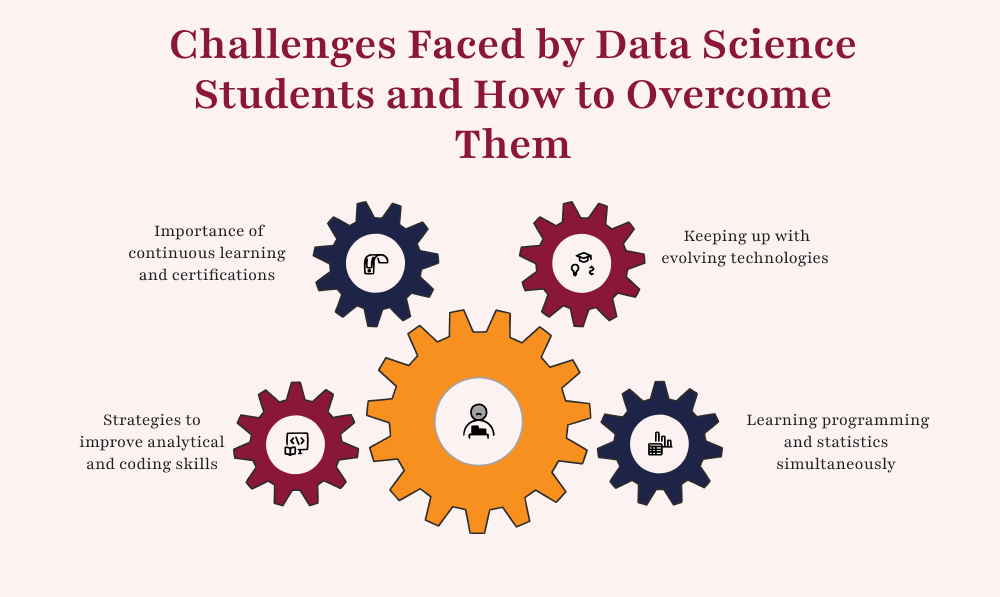
Students often struggle in the first year because the subject asks them to handle maths and coding together. That can feel tough for students who have not written code before.
Common problems include:
- Fear of programming
- Weak statistics base
- Confusion between tools and concepts
- Difficulty cleaning data
- Lack of project confidence
- Poor presentation skills
- Trying to learn too many tools at once
The fix is simple, but not instant. Start with basics. Learn Excel and statistics first. Then Python. Then SQL. Then dashboards. Machine learning should come after that.
At MIT ACSC, we help students build skill in steps. We encourage lab practice, project reviews, and presentations, so students do not wait until final year to become placement-ready.
Students who want to explore specialisation choices can read about data science specialisations.
10. How To Choose The Right Data Science College In India?
Choose a college by checking curriculum, lab exposure, faculty support, projects, internships, placement guidance, and industry links. Do not choose only by advertisements.
Use this checklist:
- Does the curriculum include Python, SQL, statistics, ML, and visualisation?
- Are lab sessions regular?
- Do students work on real datasets?
- Does the course include projects each year?
- Are internships supported?
- Does the college conduct workshops and guest lectures?
- Is there placement training for analytics roles?
- Does the college guide students for higher studies?
The right college teaches technical skills and also trains students to explain their work. In data science, communication can decide whether your analysis gets used or ignored.
Students planning long-term growth can read about MSc routes through top career paths after MSc in Data Science and whether a master's in data science is worth it.
11. Conclusion
A BSc Data Science programme can prepare Indian students for analytics, AI, machine learning, and business intelligence roles. The right data science course should include coding, statistics, databases, visualisation, projects, internships, and placement guidance.
A BSc in Data Science is an ideal field for students who value an undergraduate degree with both a business and technology aspect. The worth of a Data Science degree is maximised even more when students continue to develop skills and build projects relevant to the industry each semester.
At MIT ACSC, we provide students the opportunity for practical hands-on learning through guided projects along with career-oriented academic training. So, enquire and apply now to begin your Data Science journey with MIT ACSC.